He Went to Work. He Never Came Home.
A roofer’s perspective on fragile roofs, rooflights and why working at height can never become routine.
I’ve been roofing since I was 15 years old.
In all those years, I’ve worked on thousands of roofs. I’ve seen dangerous situations, poor practices and jobs where I’ve looked at something and thought, there is absolutely no way we’re doing that.
But recently, I attended a site to look at and price some roofing works.
While I was there, I was unexpectedly made aware that a person had previously suffered a fatal fall through a fragile rooflight on the building.
I won’t identify the site, the people involved or discuss the circumstances of the accident. That isn’t my story to tell.
But I can talk about what hearing it did to me.
It suddenly became very real
We talk about health and safety every day in construction.
RAMS. Permits. Harnesses. Edge protection. Fragile-roof procedures. Training. Signage. Rescue plans.
When you’ve worked in construction for decades, there is a danger that some of it becomes normal. Another form. Another toolbox talk. Another procedure.
Standing on a site where somebody had actually lost their life changed that perspective for me.
Someone went to work that morning.
They expected to finish their shift and go home.
They never did.
And somewhere, a family received news that changed their lives forever.
That has stayed with me.
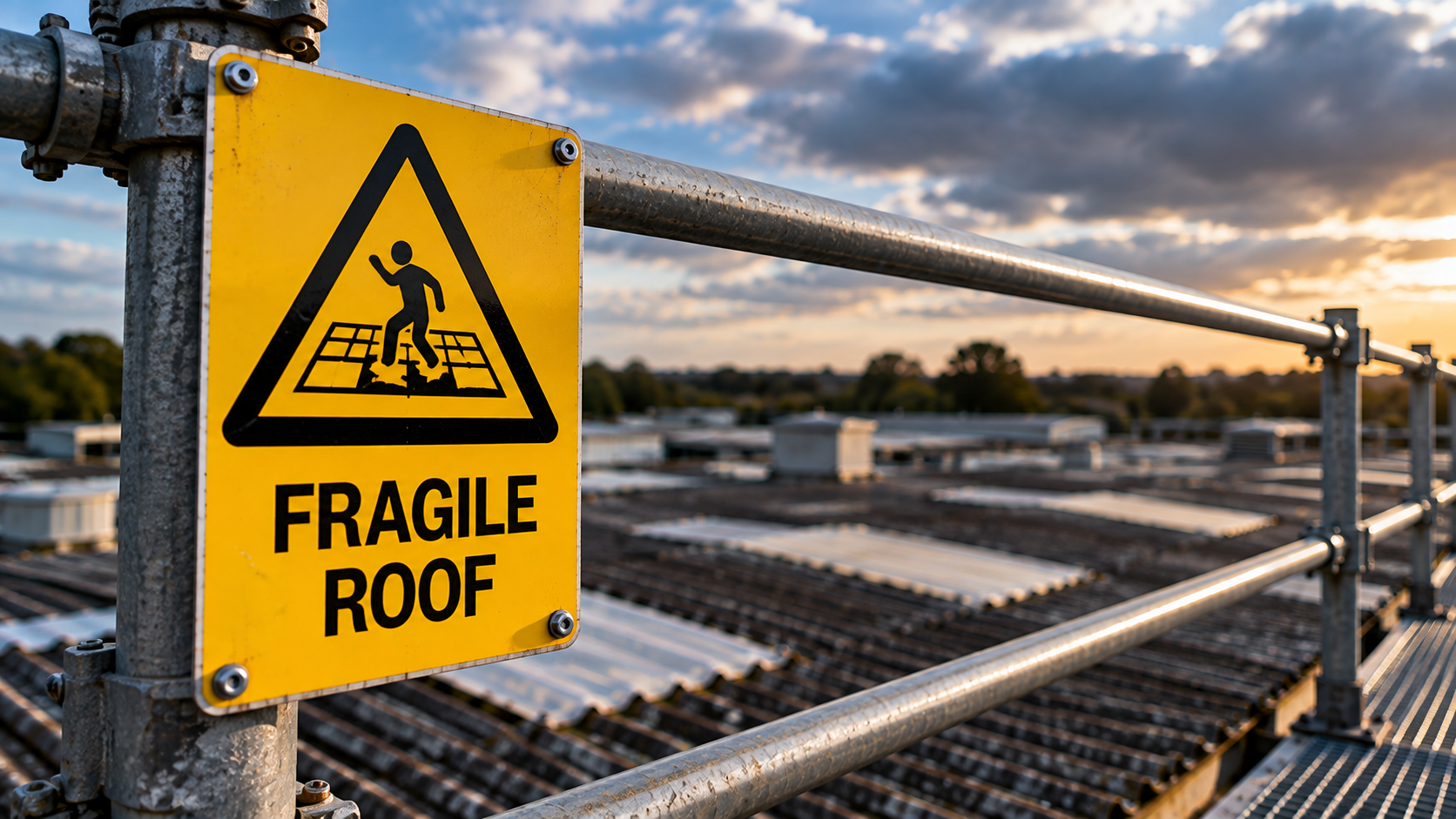
Fragile rooflights are unforgiving
Older industrial roofs can present an enormous risk.
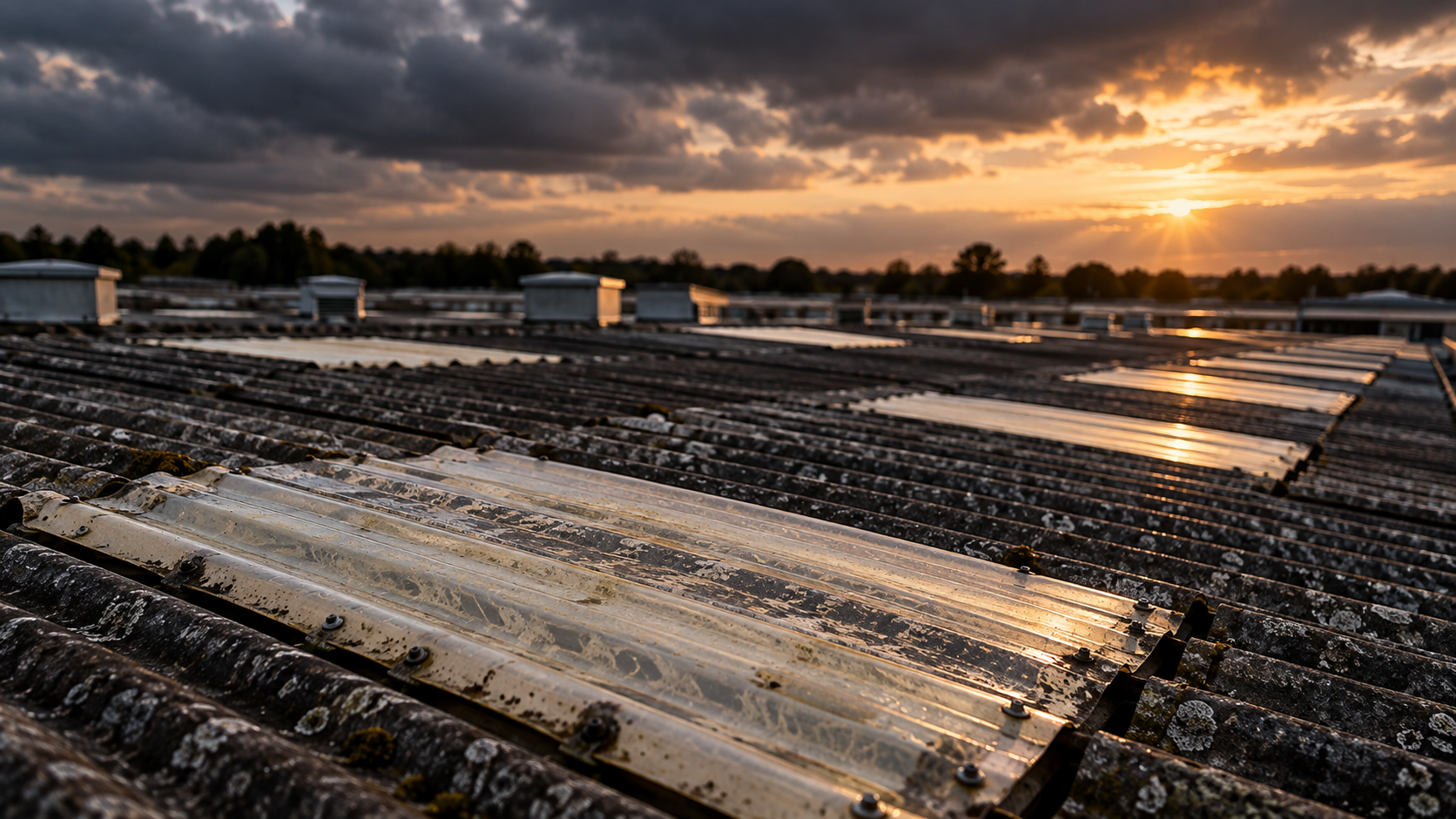
Corrugated sheets, asbestos cement roofing and ageing rooflights can all look deceptively solid from above. Dirt, weathering and discolouration can make rooflights difficult to distinguish from the surrounding roof covering.
But something that looks capable of supporting a person may not support their weight at all.
One mistake can mean a fall directly through the roof.
And depending on the building below, that could be a substantial drop.
There is no second chance halfway through a fall.
That is why nobody should simply be sent onto an unfamiliar roof because “it’ll only take five minutes.”
Before access takes place, the roof, the access method, the fragile areas, the fall risks and the required protection need to be properly understood.
Roofers aren’t working on an ordinary floor
This is something I think gets forgotten when construction work is being priced.
A skilled roofer isn’t simply another tradesperson carrying out work.
We are tradespeople carrying out skilled work at height.
Every time one of our operatives climbs onto a roof, the consequences of getting something wrong can be enormous.
That requires training.
It requires competent people.
It requires the correct access equipment.
It requires protection.
And all of that costs money.
There is huge commercial pressure throughout construction to reduce prices. Contractors get squeezed. Subcontractors get squeezed. Programmes get shortened.
There will always be conversations about efficiency and value for money. That’s business.